
Spin-off Company Liquid Instruments
25 January 2025
Liquid Instruments (LI) Pty Ltd was founded by researchers from the gravitational wave group at the ANU to commercialise advanced instrumentation technology derived from both ground and space-based gravity detectors. LI is looking to disrupt the test and measurement industry with a new class of software-enabled hardware. The company has raised $2.1M in seed funding and are about to pass $1M in cumulative sales revenue. They now employ 17 staff in the US and Australia; many of them are former researchers and students who have transitioned to industry.
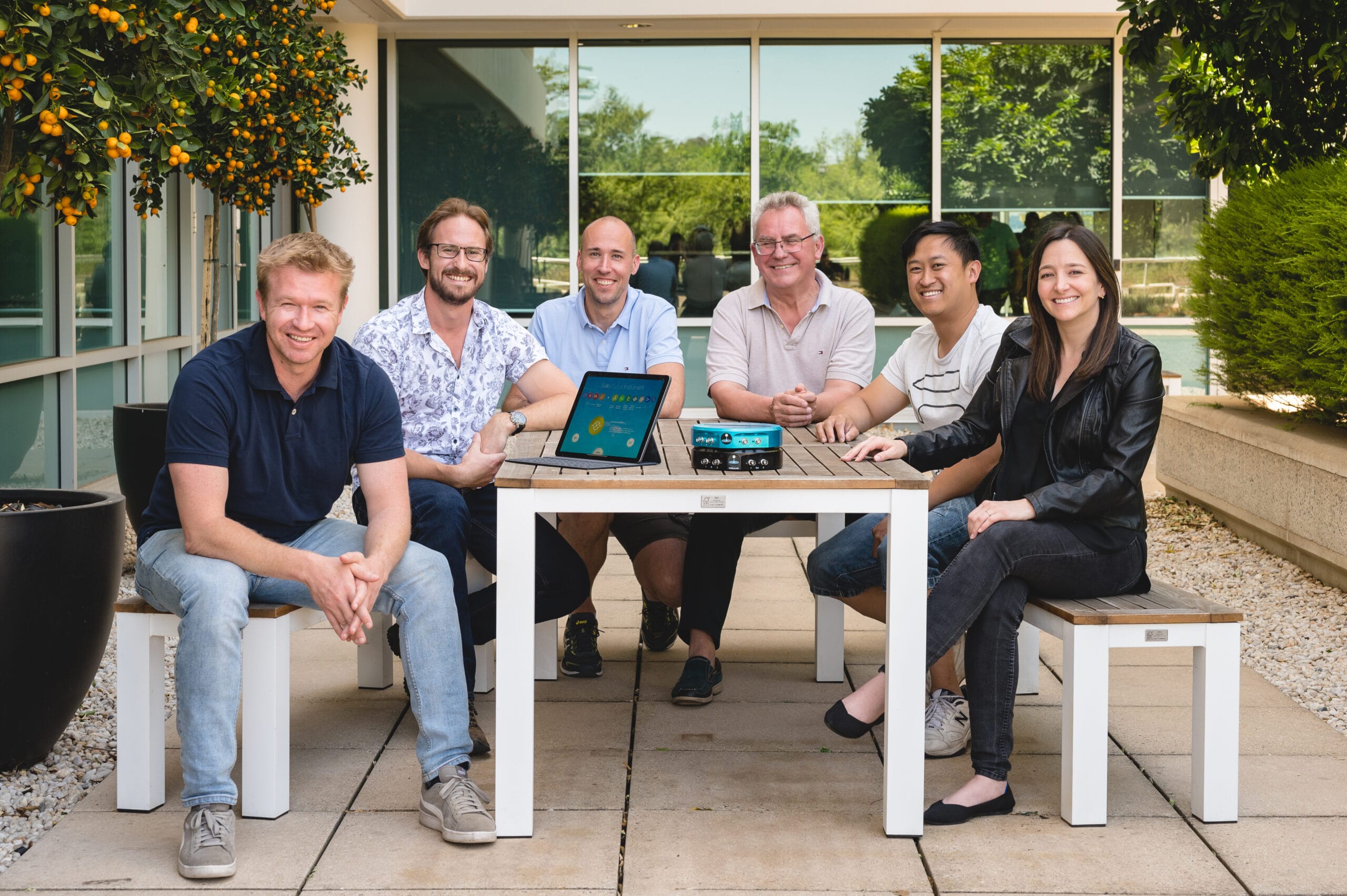
LI employs advanced digital signal processing to replace multiple pieces of conventional equipment at a fraction of the cost and with a drastically improved user experience. Their first product Moku:Lab provides the functionality of 10 instruments in one simple integrated unit. Moku:Lab is certified in all major markets with distributors covering 30 countries. In September 2017, the company transitioned to a large, top-tier manufacturing partner so they can scale production dramatically.
OzGrav Chief Investigator Daniel Shaddock (ANU), CEO of Liquid Instruments (Canberra, Australia), started his career as a postdoctoral researcher at NASA’s Jet Propulsion Laboratory (JPL) in 2002, working on the Laser Interferometer Space Antenna (LISA), a joint project between NASA and the European Space Agency. After a cut in funding for LISA, a number of the project’s engineers were assigned to the Gravity Recovery and Climate Experiment (GRACE) Follow-On mission, adapting the LISA phasemeter’s field-programmable gate array (FPGA) processor. Shaddock’s team had gained extensive expertise in signal processing and chip programming, and Shaddock started to look at other applications for this knowledge and technology. The turning point came when one team member figured out how to remotely make an FPGA reconfigure itself for different purposes. FPGAs are computer chips that are not preprogrammed, but designed to be configured by the customer.
With funding from venture capital firms, the team founded Liquid Instruments and set about building a commercial product. This product, Moku:Lab, can switch among eight common electronics test and measurement instruments, including a phasemeter, data logger, and a lock-in amplifier. Because Moku:Lab’s hardware is reconfigurable, as the company develops configurations for more instruments, users can simply download them for free. An iPad-based user interface and Wi-Fi capability are also advantages.
The company has identified four target markets including: engineers and physicists in research and development divisions; education, where Shaddock hopes to help attract the interest of more students and enrich science, technology, engineering, and math (STEM) curricula around the world; and industrial markets where electronics manufacturers use various devices to test and measure products coming off the line, with a Moku:Lab at each workstation rather than workers switching between instruments, recording test results at the commands of a central computer.
Recent news
View recent news from the Australian Research Translation and Innovation Consortium.